Sirocco Industrial
Abrasive Blasting in Darwin
Why choose Sirocco for protective coatings? Because corrosion never sleeps, and we're not tired.
Australia-wide services.
Surface Prep
The Experts in Surface Blasting
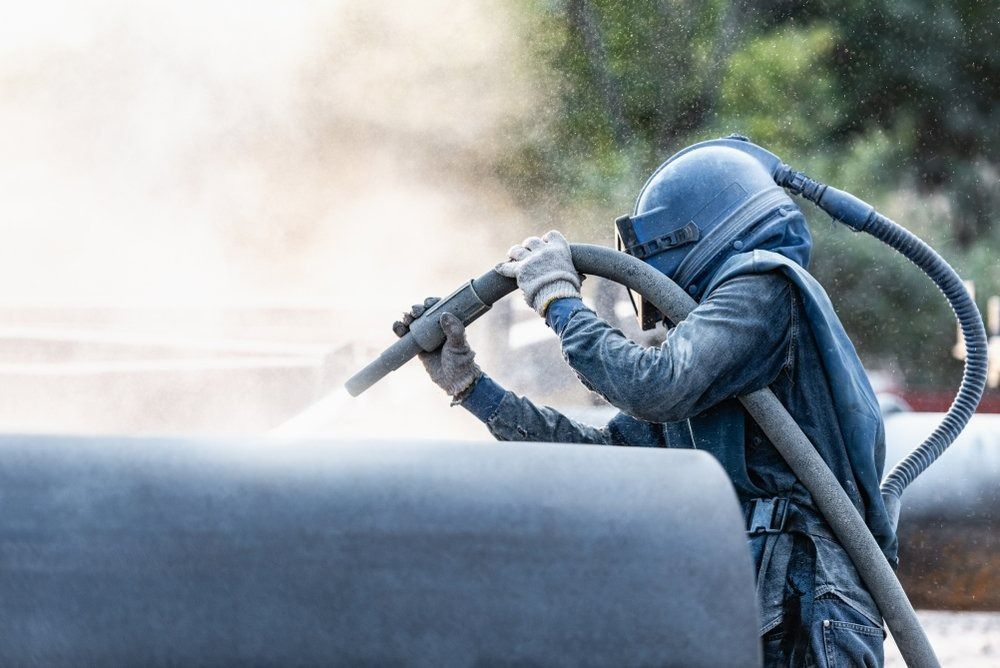
Abrasive blasting, commonly known as sandblasting, is one of the most effective methods for cleaning, restoring and preparing a wide variety of surfaces. Using premium blasting media such as garnet, steel grit, crushed glass or aluminium oxide. The process efficiently removes rust, corrosion, old coatings, scale and surface contaminants, creating a clean profile ready for protective coatings or refinishing.
Suitable for everything from heavy industrial equipment to stainless steel, aluminium and structural steel, abrasive blasting improves surface performance, extends asset life and ensures a high-quality finish.
At Sirocco Industrial, we provide professional abrasive blasting services for clients across Australia. Our experienced team can treat a wide range of assets, including industrial plants, machinery, marine vessels, trucks, trailers and structural steel components. Using advanced equipment and proven techniques, we deliver reliable, high-quality results on projects of all sizes.
Nothing is too big or small.
Precision
Our Grades of Blast Cleaning
To ensure the highest quality results for our clients, we provide the following classes of abrasive blast cleaning:
Sa 1 Brush Blast
Light blasting to remove visible surface contaminants, poorly adhering mill scale, rust, paint coatings and foreign matter.
Sa 2 Commercial Blast
Thorough blasting to eliminate surface contaminants, dirt, rust, paint coatings, mill scale and foreign matter.
Sa 2½ Near White Metal
Comprehensive blasting to clean surface contaminants, dirt, mill scale, rust, paint coatings and foreign matter. Any remaining contamination may show as slight spots or stripes.
Sa 3 White Metal
Blast cleaning to remove surface contaminants, dirt, mill scale, rust, paint coatings and foreign matter from steel surfaces. It will leave a uniform metallic colour.
Need Help?
Frequently Asked Questions
What is abrasive blasting used for?
Abrasive blasting is used to remove rust, corrosion, paint, scale and surface contaminants from materials such as steel, metal and other industrial substrates. It is commonly performed as a surface preparation method before applying industrial coatings, protective finishes or corrosion prevention systems.
In heavy industry, abrasive blasting is especially important because it creates a clean, textured surface that coatings can properly bond to. Without proper preparation, coatings may peel, blister or fail prematurely, which can lead to costly repairs and downtime. Abrasive blasting is also used for restoration work, removing old coatings from machinery, vehicles and structural steel and preparing surfaces for inspection, repairs or re-coating.
Depending on the abrasive media used, blasting can be tailored for everything from aggressive rust removal to more controlled surface cleaning.
What’s the difference between sandblasting and abrasive blasting?
Sandblasting is a type of abrasive blasting, but the term abrasive blasting is broader and more accurate today. Traditionally, sandblasting referred to blasting using sand as the abrasive material. However, due to health and safety concerns associated with silica dust, sand is less commonly used in modern industrial environments.
Abrasive blasting can involve many different media such as crushed glass, steel grit, garnet and other engineered abrasives. Each abrasive has different cutting strength, surface profile results and suitability depending on the job.
In industrial settings, abrasive blasting is typically preferred because it allows better control over the finish and is more compatible with modern corrosion prevention systems. The choice of abrasive material can also affect how well protective coatings adhere and how long they last.
How does abrasive blasting help with corrosion prevention?
Abrasive blasting plays a major role in corrosion prevention because it removes the surface rust and corrosion that can weaken metal over time. More importantly, it prepares the surface for protective coatings by creating a clean profile, which helps primers and topcoats bond properly.
When corrosion is left untreated, it can spread beneath coatings, causing them to lift or break down. Abrasive blasting removes those compromised layers and exposes a stable surface, giving protective coatings the best possible foundation.
In industries such as oil, gas, marine and mining, this process is often the first step in long-term asset protection. A properly blasted and coated surface can withstand harsh weather, salt exposure, chemical contact and heavy wear far better than an untreated surface.
Send Us a Message
Thank you for contacting Sirocco Industrial.
We will get back to you as soon as possible.
Oops, there was an error sending your message.
Please try again later.


